I joined BNI in May of 2022. I left in October of 2025.
At the time, I was looking for a better way to market SOLUENCY. What I didn’t yet understand was that I also didn’t know how networking actually worked. I treated networking events like social gatherings—conversations, handshakes, familiarity—but I didn’t understand how those interactions were supposed to translate into business in any consistent or repeatable way.
BNI (Business Network International, a structured business networking organization built around local chapters that meet weekly) was my first encounter with networking as a system. Not a loose set of suggestions, but a structure with rules, incentives, and consequences. Weekly attendance wasn’t optional. Members were expected to meet regularly one-on-one (scheduled meetings between two members intended to deepen familiarity with each other’s businesses), to give referrals (direct introductions to potential clients who are actively seeking a specific service), to track continuing education, and to participate in the mechanics that kept the group functioning. The premise was simple and demanding: you build relationships by helping other people first. If you don’t follow the system, the system doesn’t work.
That part mattered. BNI isn’t forgiving of partial participation. Showing up inconsistently, skipping one-to-ones, or treating referrals casually doesn’t just limit your own results—it weakens the group. Over time, it became clear that the value wasn’t in any single meeting, but in the accumulation of trust that only formed because everyone was operating under the same constraints.
When referrals came, they were different from most other marketing leads. They weren’t cold. They usually came from people who were already ready to buy and simply wanted to do business with someone they could trust. There was less persuasion involved, less selling. The work started further downstream.
From 2022 until now, BNI and word-of-mouth referrals were the sole source of business for SOLUENCY. I didn’t supplement that with ads or outbound campaigns. I didn’t need to.
As I became more involved, I began serving on leadership (selected volunteer roles responsible for enforcing standards, managing meetings, and maintaining accountability within the chapter). In my first year I was on the Membership Committee (the group responsible for vetting and onboarding new members). In my second year I served as Vice President (the role primarily tasked with monitoring participation and adherence to chapter expectations). In my final year, I served as President (the role responsible for overall chapter performance and coordination). Being inside leadership changed how I understood the organization. It cemented my appreciation for the system itself—how much effort it takes to maintain shared standards, and how quickly things degrade when accountability softens. It’s one thing to benefit from a system. It’s another to help hold it together.
Serving on leadership changed my relationship to the system in ways I didn’t fully anticipate. The work required to keep the chapter running—administration, accountability, governance—took time away from building relationships as a member. Leadership increased VCP (Visibility + Credibility = Profitability), BNI’s shorthand for the progression from being known, to being trusted, to receiving business, but it also shifted the nature of interactions. I was no longer just participating in the system; I was helping enforce it. That introduced a degree of politics, not by intent, but by structure. It wasn’t good or bad. It was a tradeoff that came with responsibility.
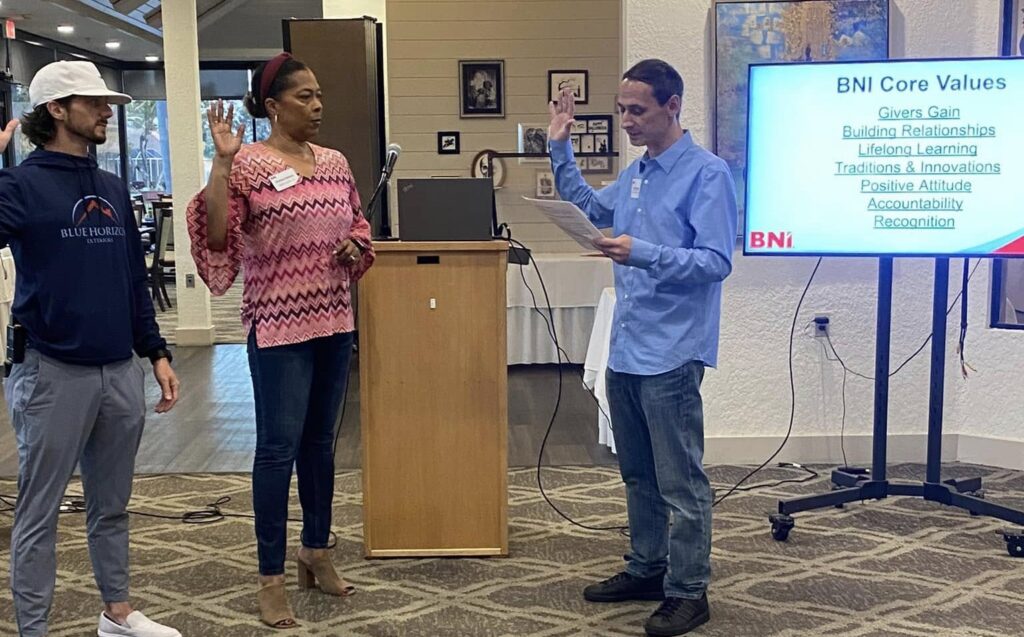
BNI’s code of ethics and core values (formal standards governing member conduct, referral integrity, and professional behavior) mattered to me because they weren’t aspirational. They were operational. They only existed to the extent that members were willing to live inside them, week after week.
I didn’t leave because BNI stopped working. I left because my capacity changed. After my legal trial ended, I decided to spend more time with my family. I waited until October so I could complete my term as President before resigning. I’d seen others leave for similar reasons—not legal, but personal. Seasons change. Some people no longer have the ability to commit to weekly attendance and the time requirements the system demands. BNI doesn’t bend much for that, and I came to see that as a feature rather than a flaw.
The support I received from people in the chapter during this season has stayed with me. Whatever the structure requires, the relationships were real.
What I carry forward isn’t a networking tactic. It’s a clearer understanding of how relationships are built especially when people agree to shared discipline and mutual responsibility. Business was the entry point, but it wasn’t the only outcome. I believe we were designed to live in community, not to operate alone. Helping one another isn’t just efficient—it’s formative.
I’m still learning what that means, and where it applies next.